
A fender bender at home is stressful enough, but a crash while road tripping through unfamiliar territory or another country adds layers of confusion most drivers never anticipate. Language barriers, unfamiliar traffic laws, and unclear insurance coverage can turn a minor incident into a logistical nightmare if you are not prepared. Knowing what steps to take before you ever leave home can mean the difference between a quick resolution and weeks of frustration. This guide walks through the essentials every road tripper should understand before hitting the highway.
Research Insurance Coverage Before You Depart
Many drivers assume their regular auto policy automatically covers them once they cross a state line or international border, but that is rarely guaranteed. Some policies limit coverage outside your home country entirely, while others reduce liability limits or exclude certain regions altogether. Before any long drive, call your insurer directly and ask for written confirmation of what is covered, including rental cars, towing, and medical payments. This single phone call can save you from discovering a coverage gap at the worst possible moment.
- Confirm whether your policy covers accidents in other countries or just other states
- Ask about rental car protections if you plan to swap vehicles mid-trip
- Check if roadside assistance extends beyond your home region
- Request a physical or digital copy of your proof of insurance in English and the local language
- Consider supplemental travel insurance with accident and medical coverage
Understand Local Traffic Laws and Reporting Requirements
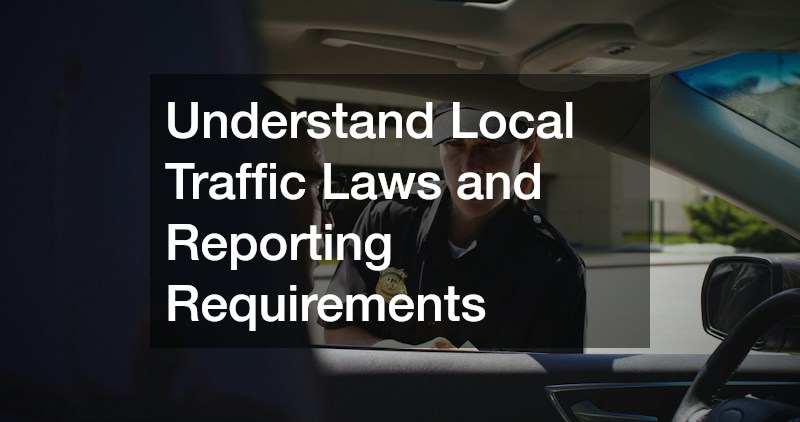
Every region has its own rules about what happens immediately after a collision, and assuming your home country’s procedures apply elsewhere is a common and costly mistake. In much of the European Union, for example, drivers are required to call police only when there’s injury, a dispute over fault, or damage above a certain threshold — otherwise you’re expected to fill out a standardized “European Accident Statement” form and exchange details without official involvement. In other countries, like much of the U.S., police attendance is expected for nearly any collision involving another vehicle, regardless of severity. Some places also dictate what you physically do with the vehicles. In parts of Asia and the Middle East, leaving cars exactly where they landed until authorities arrive is the norm, while many European countries legally require you to move vehicles out of traffic first if they’re drivable, to avoid secondary collisions. Getting this backward — moving a car where you shouldn’t, or leaving one where you must clear it — can trigger fines or complicate liability determinations later. Reporting windows vary too. Some countries give you 24 hours to file an official report at a police station if officers didn’t attend the scene, while others require immediate notification regardless of damage. Missing these windows can void your insurance coverage entirely, not just delay a claim. Failing to follow local protocol can complicate insurance claims or even result in fines. Spend a few minutes before your trip looking up basic accident procedures, police contact numbers, and reporting deadlines for each region you plan to pass through, and keep a written summary in the glove compartment in case language barriers make a quick phone search impractical at the scene.
- Learn whether police reports are mandatory or optional for minor accidents — in many European countries only incidents involving injury or major damage require one, while fender-benders are settled via insurance forms
- Find out if you must exchange information on-site or report to a station later, since some countries (like Japan) require you to notify police even for trivial collisions, regardless of damage
- Check if moving vehicles before documentation is legally required; in much of the US this is standard practice, but in parts of Europe leaving vehicles in place until police arrive is expected
- Identify the local emergency number, since it may not be 911 — the EU uses 112, the UK uses 999, and Australia uses 000
- Research whether a “constat amiable” or equivalent accident statement form is standard practice, as it is in France and several other EU nations
- Note any language requirements for statements, since some jurisdictions only accept reports filed in the official local language
Document the Scene Thoroughly and Immediately
Clear documentation protects you no matter where the accident happens, and it becomes even more critical when you are far from home and cannot easily return to the location later. Local authorities, insurers, and rental car companies abroad may be less familiar with you and less inclined to fill in gaps, so your own record often becomes the deciding factor in any dispute. Take photos of all vehicles involved, license plates, road conditions, and any visible injuries before anything is moved, if it is safe to do so. Try to capture wide shots showing the overall scene and relative positions of vehicles, along with close-ups of damage, skid marks, road signs, and traffic signals. If other drivers or pedestrians witnessed the incident, ask for their names and contact information, since language barriers or travel schedules may make them hard to track down later. Written notes about the time, weather, and sequence of events fade from memory quickly, so jot them down while they are fresh. Include details like your speed, the direction you were traveling, and any unusual road hazards, since these small facts often matter most when reconstructing events weeks later. A voice memo on your phone can work just as well as handwritten notes if you’re shaken up or pressed for time. This evidence becomes invaluable later when filing claims or discussing the incident with a lawyer, particularly if the accident happened in a country where you won’t be present for a follow-up investigation. Keep digital copies backed up to the cloud, since phones can be lost, damaged, or confiscated as part of a local investigation.
- Photograph all vehicle damage from multiple angles, including wide shots that show the vehicles’ positions relative to each other and the road
- Capture road signs, traffic signals, lane markings, and skid marks before traffic or cleanup crews disturb the scene
- Shoot short videos panning across the full scene to capture details still photos might miss
- Record contact information for all drivers, passengers, and witnesses, including phone numbers, addresses, and insurance details
- Photograph each driver’s license, license plate, and insurance card to avoid transcription errors
- Note the exact location using GPS coordinates or nearby landmarks, especially in rural areas without clear addresses
- Write down the time, date, weather conditions, and direction each vehicle was traveling while details are fresh
- Save copies of any official reports filed at the scene, and get the responding officer’s name and badge number
- Request a copy of the police report number or case number before leaving, since some countries require you to request it separately later
Know When to Involve Legal Help
Not every accident requires a lawyer, but serious injuries, disputed fault, or dealing with an uncooperative foreign insurer often call for professional guidance. If you are injured while driving a car and the other party disputes responsibility, consulting the best car accident attorney available in that jurisdiction can help you understand your rights and avoid signing away compensation you deserve. The process can be especially tricky across borders, where unfamiliar legal systems and language differences make self-representation risky. A local professional who understands both the law and the practical realities of cross-border claims can save you significant time and stress.
It is worth noting that legal needs can shift depending on the type of vehicle involved in the crash. Someone injured while riding on two wheels may find that a motorcycle accident attorney has more specialized experience with the unique injury patterns and liability questions that come with motorcycle collisions. Researching legal options before your trip, rather than scrambling afterward, puts you in a far stronger position if something goes wrong.
Keep Essential Documents and Contacts Accessible
Scrambling to find your passport, insurance card, or embassy contact information while shaken up after a crash only adds to the stress of the situation. Before departing, assemble a single folder, both physical and digital, with every document you might need in an emergency. Store a backup copy in cloud storage so you can access it from any device if your phone or bag is lost or damaged. Share this folder with a trusted contact at home who can help coordinate if you are unable to communicate clearly.
- Passport, driver’s license, and visa copies
- Insurance policy numbers and emergency hotline
- Embassy or consulate contact information for the countries you are visiting
- Emergency contacts for family members back home
- A list of personal injury lawyers or legal aid resources in major cities along your route
Plan for Medical Care and Follow-Up Treatment
Injuries from a car accident do not always show symptoms immediately, which makes follow-up care an important part of your post-accident plan, especially when you are traveling. Research hospitals and clinics along your planned route ahead of time so you are not searching for care while in pain or disoriented. Keep records of any treatment received abroad, since these documents may be needed later for insurance claims or legal proceedings back home. Travel insurance that includes medical evacuation coverage is worth strong consideration for longer international trips.
- Identify major hospitals or urgent care centers along your route in advance
- Keep physical and digital copies of all medical records and receipts
- Ask your doctor about medications or health conditions that may need special attention abroad
- Confirm whether your health insurance has any international coverage at all
A road trip should be remembered for the scenery and adventure, not for the chaos of handling an accident unprepared. Taking time before you leave to understand your insurance, local laws, and emergency resources puts you in control if the unexpected happens. Pack your documents, know your coverage, and research local resources so you can focus on recovery rather than confusion. A little preparation now means peace of mind for every mile ahead.