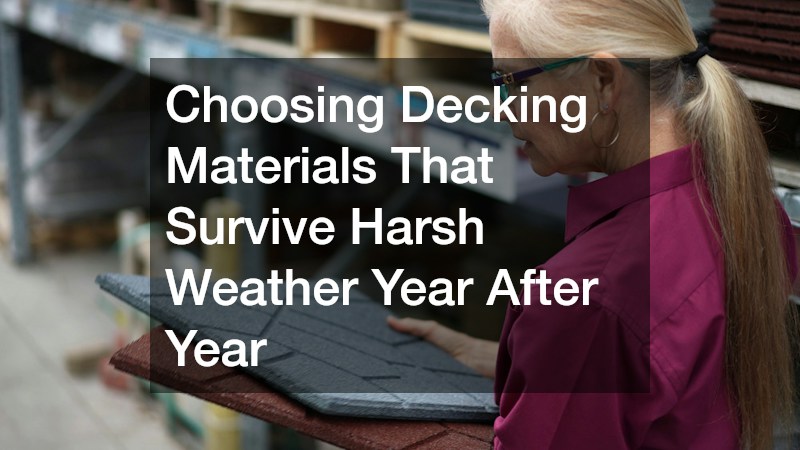

A deck should be a place for morning coffee and summer barbecues, not a recurring repair project. Yet sun, rain, snow, and temperature swings take a toll on decking materials faster than most homeowners expect, leaving warped boards, rusted fasteners, and faded finishes in their wake. Choosing the right material upfront can mean the difference between a deck that lasts five years and one that lasts twenty-five.
This guide breaks down the most durable decking options and what actually determines how well they hold up against the elements.
Wood Decking and Its Vulnerability to Moisture
Traditional wood decking remains popular because of its natural look and lower upfront cost, but it is also the material most affected by weather extremes. Moisture seeps into untreated or poorly sealed wood, causing it to swell, crack, and eventually rot from the inside out. Pressure-treated lumber offers some resistance to insects and decay, but it still requires regular sealing to keep water from penetrating the surface.
Climate plays a huge role in how long wood decking survives. In regions with heavy rainfall or humidity, wood decks often need resealing every one to two years to maintain their protective barrier. In colder climates, freeze-thaw cycles can cause boards to crack or split if moisture has already worked its way into the grain.
- Cedar and redwood naturally resist decay better than pine but still need periodic sealing
- Pressure-treated lumber is budget-friendly but prone to warping without maintenance
- Annual inspections for soft spots or discoloration help catch rot early
- Sealants should be reapplied before the rainy or winter season begins
Composite Boards and Long-Term Weather Resistance
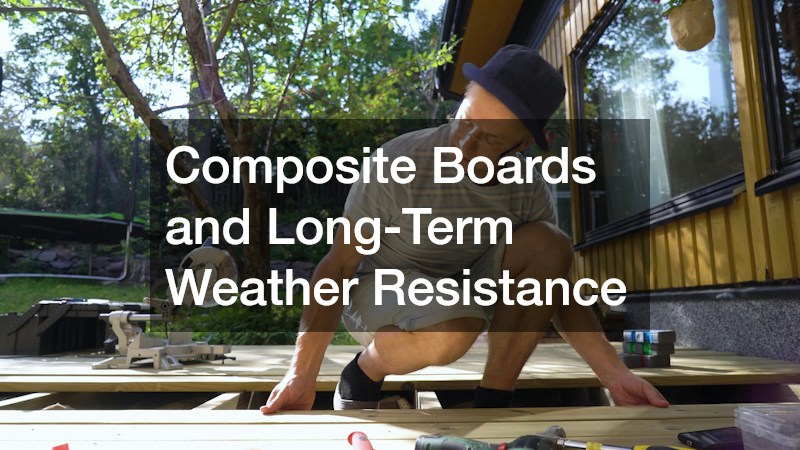
Composite decking, made from a blend of wood fibers and recycled plastic, has become a go-to choice for homeowners who want the look of wood without the constant upkeep. These boards resist moisture absorption far better than solid wood, which means less swelling, splintering, and warping over time. Many composite products also include UV-resistant coatings that help prevent fading, even after years of direct sun exposure.
One tradeoff with composite decking is that quality varies significantly between manufacturers, so it pays to research warranties and material composition before buying. Cheaper composite boards may still absorb some moisture at the core, leading to mold growth in damp climates. Higher-end composites typically feature a fully encapsulated design, sealing the core from the elements on all sides.
- Look for boards with a capped or encapsulated exterior for maximum moisture protection
- Check warranty length, since quality composites often carry 25 to 50-year guarantees
- Darker composite colors may absorb more heat, which matters in sunny climates
- Mold-resistant formulations are worth the extra cost in humid regions
Metal Decking Systems for Extreme Climate Durability
For homeowners dealing with truly extreme weather, including heavy snow loads, high winds, or coastal salt air, metal decking systems offer a level of durability that wood and composite materials simply cannot match. Composite metal decking combines a steel or aluminum structural base with a composite or concrete overlay, creating a surface that resists corrosion, impact damage, and temperature-related expansion far better than traditional materials. This hybrid approach is increasingly used not just in commercial construction but in residential applications where longevity is the top priority.
The appeal of composite metal decking lies in its structural stability under stress. Unlike wood, it will not rot, splinter, or attract termites, and unlike standard aluminum decking, the composite layer reduces the slipperiness that bare metal can develop when wet. Homeowners in hurricane-prone or snow-heavy regions often find that the upfront investment pays off through decades of reduced maintenance and repair costs.
- Resistant to rot, insect damage, and warping caused by moisture
- Handles heavy snow loads and high wind exposure better than traditional decking
- Often used in combination with corrosion-resistant coatings for coastal properties
- Requires professional installation due to its structural components
PVC Decking Performance in Sun and Rain
PVC decking is made entirely from synthetic materials, with no wood content at all, making it virtually impervious to moisture damage. This makes it an excellent option for areas with heavy rainfall, high humidity, or frequent flooding, since there is no organic material to rot or support mold growth. PVC also tends to be lighter than composite decking, which can simplify installation and reduce structural load requirements.
The main consideration with PVC decking is heat performance, since some formulations can become notably warm underfoot in direct summer sun. Manufacturers have improved heat-reflective technology in recent years, so newer PVC products handle sun exposure better than older generations. It is worth requesting samples and testing them outdoors before committing to a color and finish.
- Completely waterproof core eliminates rot and moisture-related warping
- Lightweight construction makes it easier to work with during installation
- Lighter colors generally stay cooler in direct sunlight
- Low-maintenance surface typically only needs occasional washing
Fastener and Framing Choices That Affect Deck Longevity
Even the best decking material will fail prematurely if the fasteners and framing beneath it are not built to handle the same weather conditions. Standard steel screws and nails can rust quickly when exposed to moisture, staining boards and weakening structural connections over time. Stainless steel or coated fasteners cost more initially but dramatically reduce the risk of corrosion-related failures.
The framing material matters just as much as the decking surface itself. Pressure-treated wood framing can still rot if drainage beneath the deck is poor, so proper grading and ventilation are essential regardless of what decking material sits on top. Homeowners replacing an old deck should view it as an opportunity to upgrade both the visible boards and the hidden support structure.
- Use stainless steel or ceramic-coated screws to prevent rust streaks
- Ensure proper spacing between boards for drainage and airflow
- Inspect joists and beams annually for signs of moisture damage
- Consider composite or metal framing for added resistance in wet climates
Conclusion
Selecting decking that can withstand years of harsh weather comes down to understanding how each material responds to moisture, sun, and temperature swings in your specific climate. Whether you lean toward low-maintenance composite boards, fully synthetic PVC, or a highly durable metal-based system, matching the material to your region’s weather patterns will save money and frustration down the road. Take time to request samples, compare warranties, and factor in installation requirements before making a final decision. A little research now can add decades of life to a deck you will enjoy for years to come.