Transforming the exterior of your property through hardscaping is one of the most permanent and financially significant investments you can make as a property owner. Unlike painting a wall or swapping out living room furniture, installing a new patio, laying a foundational slab, or pouring a massive driveway involves a material that is literally set in stone. Because of the permanent nature of the material, a poorly executed job is not just a minor aesthetic annoyance; it is an incredibly expensive, highly visible mistake that can negatively impact your property value, direct destructive water runoff toward your foundation, and create dangerous trip hazards.
Unfortunately, the home improvement industry is saturated with underqualified workers who promise rapid results at deeply discounted prices. These fly-by-night operations frequently cut corners in ways that are invisible to the untrained eye until it is too late. They might rush the critical curing process, order the wrong structural mix, or completely fail to excavate and compact the subgrade soil before pouring. The result is inevitably the same: a surface that looks fine on day one but rapidly develops sprawling cracks, structural heaving, and sunken corners within a single change of seasons.
Navigating the sea of options to find a legitimate, highly skilled professional requires a deliberate and investigative approach. You cannot simply rely on a quick internet search or the lowest bid. This comprehensive guide is designed to dismantle the overwhelming process of vetting exterior contractors. By the end of this article, you will be equipped with a rigorous, step-by-step framework to identify a trustworthy professional who will prioritize structural durability, precise craftsmanship, and absolute transparency from the initial consultation to the final finishing sweep.
Audit Their Proximity and Material Sourcing Logistics
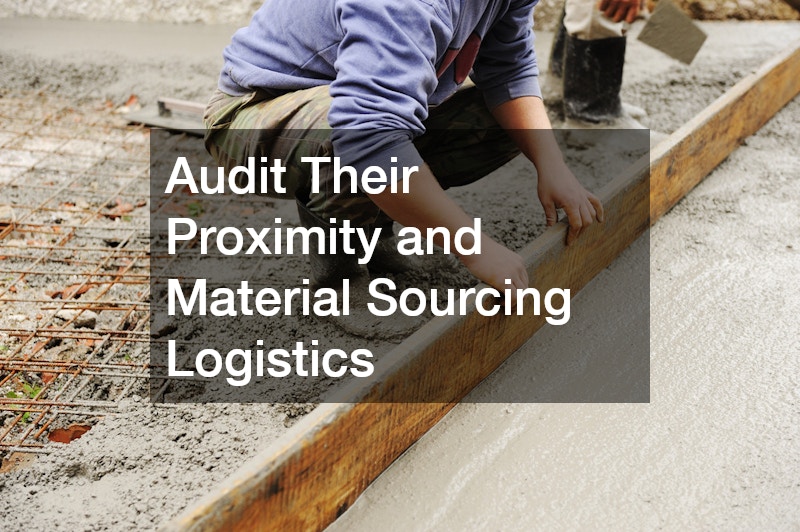
The physical location of the contractor you hire and the logistical network they utilize directly impact the physical quality and curing success of your project. While it might be tempting to hire a massive, heavily advertised franchise that operates across multiple state lines, there is an immense, often overlooked value in maintaining geographic proximity. Hardscaping is deeply intertwined with regional geography and meteorology.
Choosing established local concrete companies ensures that the team working on your property possesses an intimate, firsthand understanding of your region’s specific environmental challenges. They know the depth of the local frost line, which dictates exactly how deep footings must be dug to prevent winter heaving. They are familiar with the specific soil composition of your neighborhood—whether it is expansive clay that swells with moisture or sandy loam that shifts easily—and they know exactly how to grade and compact that specific soil type before laying the gravel base. Furthermore, neighborhood professionals have a pre-existing rapport with municipal building inspectors and understand the precise nuances of your city’s permitting requirements, preventing costly legal delays.
Beyond regional expertise, proximity dictates the actual chemical integrity of the material being poured. The mixture of cement, water, and aggregates has a very strict, scientifically mandated window of workability. From the moment the water is introduced into the mixing drum at the batch plant, the hydration process begins. Typically, the material must be discharged from the truck within 90 minutes or 300 revolutions of the drum. If a contractor sources their material from a plant that is an hour away, any minor traffic delay can result in a “hot load”—material that has already begun to prematurely set inside the truck. To force it out, workers will often illegally add excess water at the job site, a critical error that dilutes the mix, severely weakens the final compressive strength, and guarantees excessive shrinkage and cracking. Asking your prospective hire about their established relationships with nearby suppliers and how they schedule local concrete deliveries is paramount to ensuring your mixture arrives fresh, properly agitated, and structurally uncompromised.
When evaluating their logistical setup, ask the following critical questions:
-
Where is the exact batch plant located in relation to my property?
-
Do you use specific admixtures (like retarders or accelerators) depending on the forecasted temperature for the day of the pour?
-
What is your protocol if a mixer truck is delayed in transit?
-
How do you protect the newly poured surface from sudden rainstorms or extreme heat immediately after finishing?
Ensure Safe Extraction and Solid Structural Foundations
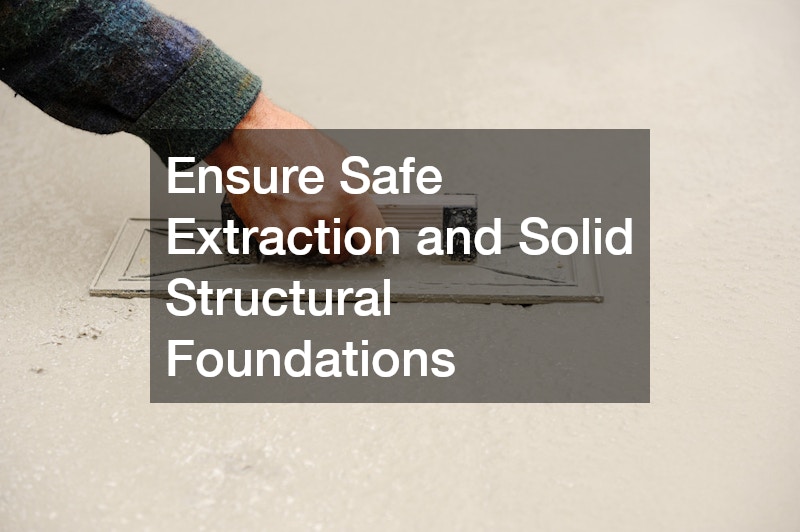
A flawless, enduring final product relies entirely on the unseen, foundational preparation that happens before a single drop of new material is poured. If you are replacing an existing, failing surface, the demolition phase is just as critical as the installation phase. Tearing out old slabs is a chaotic, heavy-duty undertaking that requires specialized machinery, rigorous safety protocols, and proper waste management.
You must ask if the contractor operates as a fully equipped concrete removal company or if they outsource this grueling work to the lowest bidding third party. An elite, full-service operation will arrive with their own fleet of skid steers, pneumatic jackhammers, and heavy-duty dump trailers. They will know how to safely navigate their heavy machinery around your delicate landscaping, underground utility lines, and irrigation systems without causing collateral damage. Furthermore, they will handle the legal disposal and potential recycling of the debris, rather than leaving you to deal with massive, expensive roll-off dumpsters sitting in your driveway for weeks.
Once the old material is gone, the focus shifts to the foundational skeleton of the new project. If your project involves load-bearing elements, vertical structures, retaining walls, or deep foundations, the contractor’s structural engineering knowledge must be thoroughly interrogated. The structural integrity of a building or a retaining wall frequently relies on the precise installation of concrete blocks. A masterful contractor understands that laying these units is not just a matter of stacking them; it involves meticulous calculations regarding the appropriate mortar mix, the strategic placement of vertical and horizontal steel rebar for tensile strength, and the proper pouring of structural grout into the empty cores to bind the entire matrix together.
To vet their preparation and structural expertise, demand answers to these points:
-
What machinery will be driven onto my property for demolition, and how will you protect my existing driveway and lawn?
-
Do you completely excavate the old base material, or do you attempt to reuse the existing subgrade?
-
What depth and type of gravel base do you specify for my specific soil conditions?
-
For vertical structures, how do you manage drainage and hydrostatic pressure behind the walls to prevent them from bowing or collapsing?
Scrutinize Their Portfolio for Aesthetic Precision

While foundational integrity is non-negotiable, the visual execution of your hardscaping project is what provides the daily enjoyment and ultimate curb appeal of your property. Pouring a basic, broom-finished gray sidewalk requires a fundamental skill set, but executing complex, high-end decorative work is an entirely different discipline that borders on artistry. You must empower yourself to critically evaluate a contractor’s aesthetic portfolio, shifting your focus from mere functionality to visual perfection.
If you are aiming for a highly customized, upscale appearance, your project might involve more than just a continuous poured slab. You might be considering the intricate, interlocking beauty of driveway pavers. Evaluating a contractor’s skill with these individual units requires an eye for detail. When reviewing their portfolio, do not just look at the overall picture; zoom in on the borders and the seams. Are the cuts clean and precise where the units meet the lawn or the house? Is the surface perfectly level, or are there subtle undulations that will collect puddling water? Do they utilize high-quality polymeric sand in the joints to lock the units in place and prevent relentless weed growth? A true craftsman will have a portfolio that holds up to the closest scrutiny.
Beyond the installation itself, the longevity of the aesthetic finish is deeply reliant on surface protection. A raw, unsealed surface is highly porous, acting like a giant sponge for motor oil, rust, tire marks, and chemical spills. If you are finishing a garage floor, a basement, or a high-end patio, ask about their expertise in applying a high-grade concrete floor coating. Do not accept a contractor who simply suggests rolling on a layer of cheap, water-based hardware store paint, which will inevitably peel within a year. A premium contractor will offer advanced solutions like two-part epoxy or polyaspartic coatings, thoroughly explaining the rigorous mechanical grinding necessary to profile the surface before application, ensuring a permanent bond that resists UV fading, chemical stains, and hot tire pickup.
When evaluating their aesthetic capabilities, focus your inquiry on these details:
-
Can you provide an address of a decorative project you completed over three years ago so I can see how the color and finish have weathered?
-
Do you use integral coloring (mixing color directly into the truck) or surface-applied dry-shake hardeners for stamped designs?
-
What is your standard protocol for cutting expansion joints? Are they hand-tooled during the pour or saw-cut the following day to prevent random spiderweb cracking?
-
What specific brand and chemical composition of sealer do you use, and what is the required maintenance schedule?
Ask About Modern Stabilization and Lifespan Extension
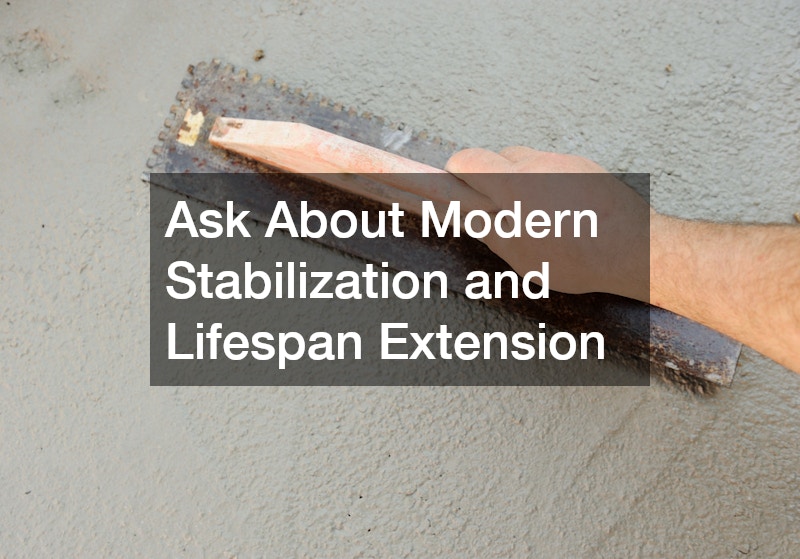
A reputable contractor should not approach every problem as an opportunity to charge you for a massive demolition and total replacement. Often, slabs that have settled, tilted, or developed trip hazards are still structurally sound internally; the issue lies entirely with the unstable, eroded soil beneath them. A contractor dedicated to providing genuine value will have a deep understanding of modern stabilization techniques and will offer cost-effective, targeted repair solutions.
You should proactively seek out contractors who also operate as skilled concrete raising companies. These specialists possess the technology to gently lift a sunken slab back to its original, level position, restoring proper drainage and eliminating trip hazards at a fraction of the cost and time required for a full replacement. In the past, this was accomplished through a process called “mudjacking,” which involved pumping a heavy slurry of soil, water, and cement beneath the slab. However, this outdated method added immense weight to an already failing subgrade, often leading to further settling down the line.
To ensure you are hiring a forward-thinking professional, ask if they utilize advanced, modern stabilization techniques. The current industry gold standard involves utilizing highly specialized foam concrete services. This technique, technically known as high-density polyurethane injection, involves drilling tiny, nearly invisible holes into the sunken slab and injecting a two-part structural polymer. As the chemicals mix, they aggressively expand, forcefully compacting the loose soil below and gently lifting the slab to a laser-leveled height. The polyurethane is entirely waterproof, meaning it will never wash away in heavy rains, and it is incredibly lightweight, adding virtually zero additional burden to the subgrade. A contractor who champions this technology demonstrates a commitment to longevity, innovation, and respecting the homeowner’s budget.
To audit their knowledge of stabilization and repairs, ask these specific questions:
-
How do you diagnose whether a sunken slab is a candidate for lifting versus mandatory demolition?
-
If utilizing polyurethane injection, how long is the curing time before I can drive my vehicle on the lifted surface?
-
What guarantees do you offer that the lifted slab will not sink again within the next five years?
-
How do you address the existing cracks in a lifted slab to prevent future water intrusion and freeze-thaw damage?
Evaluate Heavy-Duty Expertise and Long-Term Guarantees

If your project extends beyond standard residential walkways and ventures into high-traffic, heavy-load, or commercial territory, your vetting process must become exponentially more rigorous. The forces exerted on an industrial-scale slab—whether it is a warehouse floor bearing the weight of heavy machinery, an agricultural facility exposed to caustic materials, or a commercial parking lot handling constant commercial truck traffic—are immense. A contractor who excels at residential patios might be completely out of their depth when scaling up to commercial requirements.
You must thoroughly evaluate the operational and financial capacity of the entire concrete business before signing a contract. A commercial-scale project requires significant capital to secure massive quantities of material, coordinate large fleets of mixer trucks, and employ sizable crews capable of finishing vast expanses of surface area before the material sets. You must ask for proof of high-limit commercial liability insurance, workers’ compensation coverage for a large crew, and surety bonding to protect your financial investment in the event the company fails to complete the massive undertaking. Ask for case studies or references from facility managers who have utilized their services for large-scale operations.
Furthermore, commercial and heavy-duty environments require highly specialized post-pour protection that standard sealers cannot provide. If you are outfitting a mechanic shop, a manufacturing facility, or an aviation hangar, you must verify that the contractor is highly trained and certified in the application of an appropriate industrial floor coating. These environments demand ultra-durable, multi-layer resinous systems—such as moisture-mitigating primers, thick-build epoxies, and chemical-resistant urethane topcoats. The contractor must understand the science of moisture vapor transmission (MVT) testing to ensure the slab is completely dry before application, and they must utilize massive, heavy-duty planetary grinders to open the pores of the surface, ensuring the coating achieves a mechanical bond capable of withstanding the relentless abuse of heavy forklift traffic, dropped tools, and harsh chemical spills.
For heavy-duty and commercial projects, strictly verify the following:
-
What is the maximum square footage your crew can successfully pour, screed, and finish in a single day without compromising quality?
-
Can you provide certificates of insurance with liability limits that meet or exceed my commercial property’s requirements?
-
For floor coatings, do you perform calcium chloride or relative humidity (RH) testing in the slab prior to applying resinous systems?
-
What are the exact, written terms of the warranty regarding structural failure under heavy loads or coating delamination, and does the warranty cover both materials and labor?
Conclusion
Embarking on a hardscaping project is a substantial commitment of both time and financial resources. The surfaces you choose to install form the functional foundation and the aesthetic perimeter of your property. Because the stakes are so incredibly high and the margin for error is so profoundly small, the process of hiring a professional must be treated with the utmost seriousness. By refusing to rush the initial vetting process and diligently applying the rigorous, investigative steps outlined above, you transform a potentially overwhelming gamble into a highly calculated, secure investment.
Remember that a truly masterful professional will never be intimidated by your questions, nor will they attempt to pressure you into signing a hasty contract. They will welcome your scrutiny. They will eagerly showcase their deep understanding of soil compaction, provide detailed explanations of their logistical supply chains, proudly display their complex decorative portfolios, and thoroughly explain the science behind their advanced leveling and coating technologies. They understand that total transparency and clear communication are the absolute bedrock of a successful partnership.
Do not settle for vague verbal promises or incredibly low bids that seem too good to be true. Take a deep breath, gather your research, and approach your contractor consultations equipped with this comprehensive framework. Demand detailed, highly itemized written quotes from at least three different companies. By prioritizing demonstrable expertise, localized knowledge, and unwavering structural integrity, you will secure an expert partner who will dramatically enhance the beauty, safety, and long-term value of your property for decades to come.